Thursday, September 24, 2009

Egyptian Pyramids

An Egyptian Dessert Recipe

There are no more famous ancient sites within Egypt, or for that matter elsewhere in the world, than the Great Pyramids at Giza. They are, without question, the icon most associated with the Egypt. They have been both the main destination for tourists, and a source of imaginative thought to the world for over three thousand years.

However, there are actually over 100 pyramids in Egypt, many of which are relatively unknown to anyone who is not an ancient Egypt enthusiast. All but a very few are grouped around and near the City of Cairo, just south of the Nile Delta. Otherwise, only one royal pyramid is known in southern Egypt (at Abydos), that being the one built by Ahmose, founder of the 18th Dynasty and Egypt's New Kingdom. It may have also been the last royal pyramid built in Egypt.

Hence, major pyramids were not built throughout Egypt's ancient history. The Pyramid Age began with a burst of building, starting with the 3rd Dynasty reign of Djoser. Some of the early kings, most specifically Snefru, built more than one pyramid. Almost all of the kings added to their number through the end of the Middle Kingdom, with the possible exception of the First Intermediate Period between the Old and Middle Kingdoms. After the first Pharaoh of Egypt's New Kingdom, Ahmose, royal pyramid building by Egyptians ceased entirely. Somewhat abruptly the kings of the New Kingdom chose, rather than making their tombs completely obvious, to hide them in the hills of the West Bank of Thebes (modern Luxor).

However, smaller pyramids were constructed, for example in the Deir el-Medina necropolis, by private individuals. The Late Period Nubians who ruled Egypt also built relatively small pyramids with much steeper sides, though these were in fact constructed in Nubia itself. This tradition was carried on in Nubia after these southern rulers lost control of Egypt, and eventually, more pyramids were actually built in Nubia than Egypt, though on a much smaller scale.

Other pyramids in the world certainly exist, but their purpose, for the most part, was different than those of ancient Egypt. The most famous outside Egypt are probably those located in Mexico and to the south of Mexico, but these appear to have been built more as temples. In Egypt, all but a select few of the pyramids were built as tombs, sometimes to hold the physical body of a pharaoh (as well as other individuals), or to hold the soul of the deceased (as in the case of the small cult pyramids built next to the larger ones). Otherwise, the purpose of only a few small, regional stepped pyramids remains elusive.

While pyramids were, for the most part, tombs for the Pharaohs of Egypt, one must nevertheless question the reason that Egyptian rulers chose this particular shape, and for that matter, why they built them so large. Today, we believe that they chose the shape in order to mimic the Benben, a pyramid shaped stone found in the earliest of temples, which itself is thought to symbolize the primeval mound from which the Egyptians believed life emerged. This also connected the pyramid to Re, the Sun God, as it was he, according to some of the ancient Egypt mythology, who rose from the primeval mound to create life.

As far the great size of many of the pyramids in Egypt, we can really only surmise that the Pharaohs were making a statement about their own power and perhaps, about the glory and strength of their country. However, it should also be remembered that many of the latter pyramids were not nearly as large as the Great Pyramids at Giza (and elsewhere).

Pyramids evolved. The first of them was not a perfectly formed pyramid. In fact, the first Pyramid we believe that was built in Egypt, that of Djoser, was not a true pyramid at all with smooth sides and a point at the top. Rather, its sides were stepped, and the top of the pyramid truncated with a flat surface (as best we know). As the Egyptian pyramids evolved, there were failures as well glorious failures until finally, they got it right with what was probably the first smooth sided true pyramid built at Meidum. In fact, pyramids continued to evolve throughout their history, perhaps not always in outward appearances, but in the way that they were built and in the theology surrounding their construction. For example, towards the latter part of Egypt's Pyramid Age, Osirian beliefs seem to have had more and more impact on the arrangement and layout of the subterranean chambers.

However, soon after the first pyramids were built, their form became somewhat standardized. Royal pyramid complexes included the main pyramid, a courtyard surrounding the main pyramid, a much smaller cult pyramid for the king's soul, a mortuary temple situated next to the main pyramid, an enclosure wall and a causeway that led down to a valley temple. Some pyramid complexes included subsidiary, smaller pyramids for family members, and most were surrounded by some sort of tombs for family members.

Our thinking on pyramids has evolved considerably over the years. Many of us who are a bit older were taught that the pyramids were built using Jewish slave labor, which is a fabrication of immense proportions. Most of the pyramids were built long before the Jews made their appearance historically and currently, many if not most scholars believe they were not built using slave labor at all (or perhaps a nominal number of slaves).

Otherwise, we can also dismiss offhand alternative theories related to aliens or some lost culture being responsible for pyramid building. There is just far too much evidence, including tools, drawings, evolutionary changes, and even worker villages that rule these farfetched ideas obsolete.

However, some mysteries remain, even in some of the best well known Pyramids. The most famous of them all, the Great Pyramid of Khufu, continues, year after year, to give up a few more secrets, and there doubtless remains much to learn from these Egyptian treasures. There may even be one or more pyramids yet to be discovered.


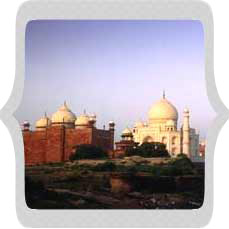
The Taj Mahal,Agra

ONE OF THE WONDER OF THE WORLD
line

History of Taj Mahal

line

History of Taj MahalThe history of the Taj Mahal tells us "why was the Taj Mahal built" and many other myths and facts associated with this wonderful structure. Mughal Emperor Shah Jahan erected the Taj Mahal in the memory of his beloved wife, Mumtaz Mahal. Shah Jahan (then Prince Khurram) met Mumtaz Mahal (then Arjumand Banu Begum) at the age of fourteen and fell in love at the first sight. She was a Muslim Persian princess and Shah Jahan was the son of the Mughal Emperor, Jehangir. Five years later, in 1612, they got married. As you read further you will come to know more about the history of the Taj Mahal at Agra…

Mumtaz Mahal, an inseparable companion of Shah Jahan, died in 1631, while giving birth to their 14th child. It is believed that during her last moments, Mumtaz Mahal obtained a promise from Shah Jahan that he will build world's most beautiful monument in her memory. But this has not been proven to be true, till date. However, Shah Jahan did indeed build a magnificent monument as a tribute to her wife, which we today know as the "Taj Mahal". Shah Jahan, himself also, lies entombed in this mausoleum along with his wife.

The construction of Taj Mahal started in the year 1631 and it took approximately 22 years to build it. An epitome of love, it made use of the services of 22,000 laborers and 1,000 elephants. It was built entirely out of white marble, which was brought in from all over India and central Asia. After an expenditure of approximately 32 million rupees (approx US $68000), Taj Mahal was finally completed in the year 1653. However, the history of Taj Mahal of India still has some gaps. For example, there are many theories regarding the architect of this magnificent monument.

line

The Roman Colosseum,Italy


ONE OF THE WONDER OF THE WORLD


The Colosseum, (the Flavian Amphitheatre) is one of Rome's most famous buildings and enduring monuments to the culture of the ancient Romans. Construction was initiated by the Emperor Vespasian around 72 AD. His son Titus reigned over its completion and the official opening ceremonies, about 8 years later, in 80 AD. It was built near the site of Nero's Domus Aurea "Golden House". This is significant in that his successor, Vespasian wanted to erase the memory of Nero's extravagant reign from the minds of Romans. It got its popular name, the Colosseum, because of Nero's colossus (120 ft. high) statue of himself, which was nearby.

The huge theater was originally built encompassing four floors. The first three had arched entrances, while the fourth floor utilized rectangular doorways. The floors each measured between 10,5-13,9 meters (32-42 feet) in height. The total height of the construction was approximately 48 meters (144 feet). The arena measured 79 x 45 meters (237-135 feet), and consisted of wood and sand. (The word "arena" is derived from the Latin arena, which means "sand.") Nets along the sides protected the audience.

The Colosseum had a total spectator capacity of 45,000-55,000. The Amphitheater is built of travertine outside, and of tufa and brick in the interior. The main pedestals were built of marble blocks weighing 5 metric tons (11,000 pounds.) Initially the huge marble blocks were held together by metal-pins. However, the pins were soon carried off by thieves, and had to be replaced by mortar. The total amount of marble needed for the construction measured approximately 100,000 cubic meters. It was carried by 200 ox-pulled carts, which supplied a sufficient flow of needed materials.

There were no less than 76 numbered entrances and 4 additional entrances reserved for the Emperor, other VIP's and the gladiators. The Colosseum was designed for easy crowd dispersal; the entire audience could exit the building in five minutes. The interior was divided into three parts: the arena, the podium, and the cavea. Now more than two-thirds of the original building has been removed and the rows of the seats in the cavea are missing. It is very similar to other amphitheaters except this one is much bigger.

The audience, upon entering, climbed sloping ramps to their seats, according to gender and social class. Obviously, the higher one's social status, the better their seating arrangement would be. For example, women (excepting spouses and perhaps imperial family) and the poor, stood or sat on wooden benches in the fourth tier. For inclement or very hot weather conditions, an enormous, colored awning (velarium) could be stretched overhead to protect the crowd.

A wooden floor covered subterranean chambers where the gladiators and animals were kept waiting to perform. There is some debate over the idea that the Colosseum was occasionally flooded for mock naval battles. There were canals in place that could have been used for this purpose but the brick used in construction was not the same type of material that they normally used in water resistant materials.

The Colosseum was the Empire's primary stage for gladiatorial combat for nearly 4 centuries. In a show of Rome's wealth and extravagance, during the opening ceremonies in 80 AD, 100 days of the games were held.

Chichen Itza,Mexico

ONE OF THE WONDER OF THE WORLD IN 2009

The sacred city of the Itza, called Chichen-Itza (chee-chehn eet-sah) in Maya, is located 75 miles east of Merida, the Capital of the State of Yucatan, Mexico. This archaeological site is rated among the most important of the Maya culture and covers an area of approximately six square miles where hundreds of buildings once stood. Now most are mounds, but about thirty may still be seen by tourists.

The ruins are divided into two groups. One group belongs to the classic Maya Period and was built between the 7th and 10th centuries A.D., at which time the city became a prominent ceremonial center. The other group corresponds to the Maya-Toltec Period, from the later part of the 10th century to the beginning of the 13th century A.D. This area includes the Sacred Well and most of the outstanding ruins.

When Chichen-Itza was first settled it was largely agricultural. Because of the many cenotes in the area, it would have been a good place to settle. During the Central Phase of the Classic Period, referred to as Florescence, (625 -800 A.D.) arts and sciences flourished here. It was at this time that Chichen-Itza became a religious center of increasing importance, evidenced by the buildings erected: the Red House, the House of the Deer, the Nunnery and its Annex, the Church, the Akab Dzib, the Temple of the Three Lintels and the House of Phalli.

Toward the end of the Classic Period, from 800 to 925 A.D., the foundations of this magnificent civilization weakened, and the Maya abandoned their religions centers and the rural land around them. New, smaller centers were built and the great cities like Chichen-Itza were visited only to perform religious rites or bury the dead. The Itza people abandoned their city by the end of the 7th century A.D. and lived on the west coast of the peninsula for about 250 years. However, by the 10th century A.D. they returned to Chichen-Itza.

Around 1000 A.D. the Itza allied themselves with two powerful tribes, Xio and Cocom, both claiming to be descendants of the Mexicans. This alliance was favorable to the Itza for about two centuries. During this time, the people of Chichen-Itza added to the site by constructing magnificent buildings bearing the touch of Toltec art: porches, galleries, colonnades and carvings depicting serpents, birds and Mexican gods.

The Toltec influenced the Itza in more ways than just architecture. They also imposed their religion on the Itza, which meant human sacrifice on a large scale. They expanded their dominions in northern Yucatan with an alliance with Mayapan and Uxmal. As the political base of Chichen-Itza expanded, the city added even more spectacular buildings: the Observatory, Kukulcan's Pyramid, the Temple of the Warriors, The Ball Court, and The Group of the Thousand Columns.

The Temple of the Warriors has pillars sculptured in bas-relief, which have retained much of their original color. Murals once adorned its walls. It is surrounded by numerous ruined buildings known as the Group of a Thousand Columns.

sacred_cenote.gif (48467 bytes)The Cenote of Sacrifice was reserved for rituals involving human sacrifice involving the rain God. The victims were not only young women, but also children and elderly men and women.

castillo.jpgPossibly the best known construction on the site is Kukulcan's Pyramid. El Castillo (Kukulkan-Quetzalcoatl), a square-based, stepped pyramid that is approximately 75 feet tall. This pyramid was built for astronomical purposes and during the vernal equinox (March 20) and the autumnal equinox (September 21) at about 3 P.M.. the sunlight bathes the western balustrade of the pyramid's main stairway. This causes seven isosceles triangles to form imitating the body of a serpent 37 yards long that creeps downwards until it joins the huge serpent's head carved in stone at the bottom of the stairway. Mexican researcher Luis El Arochi calls it "the symbolic descent of Kukulcan" (the feathered serpent), and believes it could have been connected with agricultural rituals.

In 1194, Mayapan broke the alliance and subdued Chichen and Uxmal. The city was gradually abandoned.

Machu Picchu,Peru


Ruins of Machu Picchu

The ruins of Machu Picchu, rediscovered in 1911 by Yale archaeologist Hiram Bingham, are one of the most beautiful and enigmatic ancient sites in the world. While the Inca people certainly used the Andean mountain top (9060 feet elevation), erecting many hundreds of stone structures from the early 1400's, legends and myths indicate that Machu Picchu (meaning 'Old Peak' in the Quechua language) was revered as a sacred place from a far earlier time. Whatever its origins, the Inca turned the site into a small (5 square miles) but extraordinary city. Invisible from below and completely self-contained, surrounded by agricultural terraces sufficient to feed the population, and watered by natural springs, Machu Picchu seems to have been utilized by the Inca as a secret ceremonial city. Two thousand feet above the rumbling Urubamba river, the cloud shrouded ruins have palaces, baths, temples, storage rooms and some 150 houses, all in a remarkable state of preservation. These structures, carved from the gray granite of the mountain top are wonders of both architectural and aesthetic genius. Many of the building blocks weigh 50 tons or more yet are so precisely sculpted and fitted together with such exactitude that the mortarless joints will not permit the insertion of even a thin knife blade. Little is known of the social or religious use of the site during Inca times. The skeletal remains of ten females to one male had led to the casual assumption that the site may have been a sanctuary for the training of priestesses and /or brides for the Inca nobility. However, subsequent osteological examination of the bones revealed an equal number of male bones, thereby indicating that Machu Picchu was not exclusively a temple or dwelling place of women.

One of Machu Picchu's primary functions was that of astronomical observatory. The Intihuatana stone (meaning 'Hitching Post of the Sun') has been shown to be a precise indicator of the date of the two equinoxes and other significant celestial periods. The Intihuatana (also called the Saywa or Sukhanka stone) is designed to hitch the sun at the two equinoxes, not at the solstice (as is stated in some tourist literature and new-age books). At midday on March 21st and September 21st, the sun stands almost directly above the pillar, creating no shadow at all. At this precise moment the sun "sits with all his might upon the pillar" and is for a moment "tied" to the rock. At these periods, the Incas held ceremonies at the stone in which they "tied the sun" to halt its northward movement in the sky. There is also an Intihuatana alignment with the December solstice (the summer solstice of the southern hemisphere), when at sunset the sun sinks behind Pumasillo (the Puma's claw), the most sacred mountain of the western Vilcabamba range, but the shrine itself is primarily equinoctial.

Shamanic legends say that when sensitive persons touch their foreheads to the stone, the Intihuatana opens one's vision to the spirit world (the author had such an experience, which is described in detail in Chapter one of Places of Peace and Power, on the web site, www.sacredsites.com). Intihuatana stones were the supremely sacred objects of the Inca people and were systematically searched for and destroyed by the Spaniards. When the Intihuatana stone was broken at an Inca shrine, the Inca believed that the deities of the place died or departed. The Spaniards never found Machu Picchu, even though they suspected its existence, thus the Intihuatana stone and its resident spirits remain in their original position. The mountain top sanctuary fell into disuse and was abandoned some forty years after the Spanish took Cuzco in 1533. Supply lines linking the many Inca social centers were disrupted and the great empire came to an end. The photograph shows the ruins of Machu Picchu in the foreground with the sacred peak of Wayna Picchu towering behind. Partway down the northern side of Wayna Picchu is the so-called "Temple of the Moon" inside a cavern. As with the ruins of Machu Picchu, there is no archaeological or iconographical evidence to substantiate the 'new-age' assumption that this cave was a goddess site.

Intihuatana stone, Machu Pichu
The Intihuatana stone, Machu Picchu


Macchu Picchu Ruins
Ruins of Machu Picchu, Peru


Ruins of Machu Picchu, Peru


Road from Aguas Calientes up to Machu Picchu, Peru


Detail of stone work at Machu Picchu

Christ The Redeemer,Brazil


A century passes and the mountain is re-baptized to Corcovado, a name derived from its form, which resembles a hump or hunchback. The next recordings of christ the redeemer history is in 1924 when Dom Pedro personally led the first official expedition to Corcovado Mountain, resulting in the opening of an accessable way up.

Then in 1859 the Vincentian father Pedro Maria Boss arrived Rio de Janeiro and was struck by the mystorious beauty of the corcovado mountain and suggested the the construction of a religous monument in honour of Princess Isabel, which in 1921 gave way for the idea of a great statue of christ viewable by all in the marvelous city of Rio. From 1859 to 1921, Dom Pedro gave his consent for the building of the Corcovado Railroad line between Cosme Velho and Paineiras, which would be an essential part of undertaking the Redentor.

In 1922, on the markation of Brazilian independence and a milepeal in the Statue of Christ the Redeemer history, the work began for fullfilling the ambisious project with the fundamental stone beeing put inplace on the 22.april.

After a hard competition, the project by the engineer Heitor da Silva Costa is chosen and in September, a national fundraising campaign for the works is organized.


Finally, in 1927, the construction of the statue begins after models of diverse sizes had been constructed. All calculations were done by Coast Hisses, helped by Pedro Viana and Heitor Levy, which during the years of construction, resided in a shed of wood at the foot of the monument.


RAILROAD

All the necessary work material and workers who participated in the construction of the Christ statue were transported to Corcovado by the trains from the railroad that links the street Cosme Velha, which today functions as a tourist train to the top. The train was the first in Brasil appointed exclusively to transportation of tourists and also the first train to work by electricity.

INAUGURATION

1931 – Is the famous year in the Statue of Christ the Redeemer history, where the monument is inaugurated on the 12 October. The final design of the monument was authored by the fine artist Carlos Oswald and the French Sculptor Paul Landowski was placed in charge of executing the sculpture. The monument to Christ, the Redeemer on the Corcovado mountain becomes the largest art déco sculpture in the world.


Up till today, several reforms have been completed to ensure the quality of O Christo Redentor. Lighting has been added, and the latest renewal of September 2002 is the addition of a panoramic elevator and motorized staircase to ease the difficulty for elderly persons. ( It used to be a hard rise of 220 steps to get to the top )


All the equipment, bought from the Elevators Otis, will be painted in green. They are manufactured in the France and they produce little noise. The elevators are “politically correct”, by the fact that they will not use oils lubricants in the system.


Projects are also underway to renewal of toilets and trashcans and the enlargement of the parking..

Ramzan


Ramzan is the ninth month of the Islamic calendar. Read about why this time is so important to Muslims.


Ramzan or Ramadan, is a period of fasting for Muslims. The name is derived from the name of the ninth month of the Islamic calendar. The word Ramadan literally means burnt ground or intense heat. This month is considered to be the most holy month of the year in Islam. All followers of Islam are urged to follow the basic rules of fasting, prayer, charity, etc. during this month.

The month of Ramzan is further divided into three parts, consisting of ten days each. Each ten day period is referred to as 'ashra', which is the Arabic word for ten. These three parts are the Rahmah (God's mercy), Maghfirah (God's forgiveness), and Najah (salvation). The period of Ramzan ends with the celebrations on the feast day of Eid-ul-Fitr.


Origins of Fasting during Ramzan

It is believed that God's teachings to the prophet Muhammad took place during the month of Ramzan in the year 610 A.D. These teachings were eventually compiled together and became the Quran, which is the holy book of Islam. As per verse 183 in the second chapter of the Quran, fasting is compulsory. The verse reads as 'O ye who believe! Fasting is prescribed to you, as it was prescribed to those before you, that you may learn self restraint.'

The Islamic calendar is a lunar calendar. A month is considered to have begun from the time when the initial crescent of a new moon is seen. However, a lunar calendar is shorter than the regular solar calendar year of 365 days. The lunar calendar falls short by around eleven or twelve days each year. Due to this discrepancy between the two calendars, the month of Ramzan is advanced by around eleven days each year. This means that the average Muslim will have to fast in both the winter and summer months during the course of his lifetime. This ensures that the hardships faced while fasting are experienced equally by Muslims living in the northern and southern hemispheres.


Significance of Fasting

The holy month of Ramzan is said to offer all Muslims the opportunity to reform themselves and achieve spiritual communion with God. Human beings tend to lose touch with their spiritual selves as they go about their lives. To bring them back to God, Islam prescribes an annual 'roza' or 'siyam', which must be undertaken during the month of Ramzan. This is along the lines of a workshop conducted to refresh a person's religious beliefs as well as inculcate a sense of discipline with respect to temptation by material items.

'Siyam' literally means to refrain from. When applied in the context of Ramzan, it refers to cultivating the capacity for self restraint. Fasting is not only limited to food during Ramzan. Muslims are expected to abstain from food, drink, and sexual activities during the fasting period each day for the entire month of Ramzan. These restrictions are self imposed in order for people to first practice self-control when it comes to minor issues. This in turn helps them to resist greater temptations that they will encounter later on in their lives.


How Fasting helps

Prophet Muhammad declared that "fasting is not only abstinence from food and drink, fasting is to refrain from obscene acts." As per this statement, it implies that one should have complete control over one's physical and mental facilities. Thus, an individual must keep a check over the actions of his eyes, ears, tongue, hands, and heart. This will ensure that he does not lose control at any time and cause the peaceful nature of society to be disturbed. The period of Ramzan also encourages the promotion of harmony among members of the society. Residing in tranquillity with the neighbouring inhabitants is considered to be one of the best forms of charity that a person can do. This holy month prevents Muslims from participating in any aggressive acts. In fact, people are exhorted to repent and seek forgiveness from those that they have wronged earlier. Ramzan is the time for fostering the spirit of unity among all members of a community.